Digital transformation challenges UK SMEs face in 2025


By 2025, over 65% of UK SMEs will have initiated some form of digital transformation. Yet many are still struggling to generate value from it. Technical hurdles, outdated systems, and cultural resistance remain widespread, with some businesses unsure how to move forward at all.
This article explores the key digital transformation challenges UK SMEs are facing in 2025, and what’s holding back real progress.
1. Transformation risks: Security, compliance and misalignment
One of the biggest hurdles for SMEs is the risk involved in digital change. It’s not just about choosing the right software, it’s about navigating a web of technical, legal, and operational decisions.
As businesses move data to the cloud or adopt connected platforms, they expose themselves to cybersecurity threats they may not be prepared for. Attacks like ransomware and phishing are growing more common, yet many SMEs lack dedicated resources or training to protect themselves.
New systems also bring regulatory responsibilities. Compliance with UK GDPR is essential when handling customer data, and falling short can result in both financial penalties and reputational damage.
And it’s not only external risk. Internally, misaligned planning, poor vendor choices, and weak project oversight frequently cause delays or wasted spend. According to Arvato Connect, many SMEs underestimate how much structure and leadership are needed for digital change to succeed.
2. Legacy systems are slowing everything down
A significant barrier for many UK SMEs is the continued reliance on outdated, inflexible systems.
Many businesses still rely on legacy software that has been patched repeatedly over the years. These tools may work within individual departments but often don’t integrate with other platforms, making reporting, automation, and cross-team collaboration harder than it should be.
As a result:
- Data is often stuck in silos
- Manual processes persist
- Decision-making slows down
According to a 2024 survey by UST, nearly one-third of large UK firms cite legacy systems as a major blocker to progress.
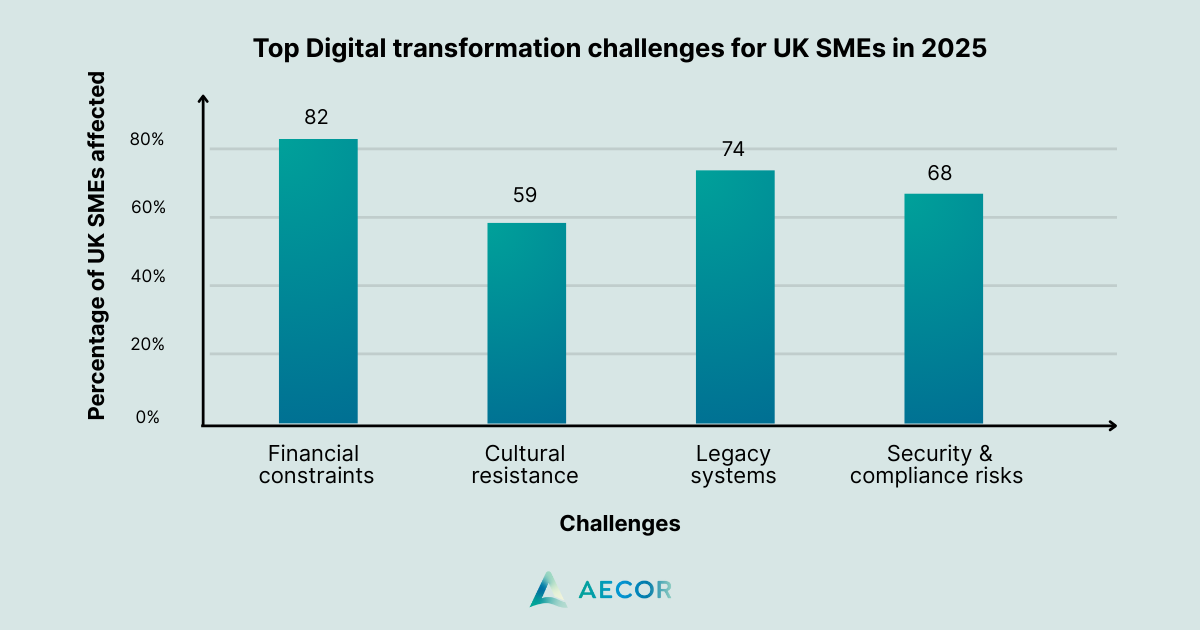
Bar chart showing the most reported digital transformation challenges among UK SMEs in 2025
These systems are typically harder to secure, less compliant with modern data regulations, and more expensive to maintain over time. They reduce agility and make it difficult to respond quickly when markets shift or customer expectations evolve.
3. Cultural barriers and change resistance
While systems can be modernised, changing internal culture is often much harder.
Staff who are used to long-standing processes may be reluctant to adopt new tools, especially if they haven’t been involved in the decision-making or trained properly. In some cases, teams fear that automation could put their roles at risk.
Common signs of internal resistance include:
- Low usage of new tools post-launch
- Teams continuing to work in silos
- Lack of consistent adoption across departments
A shortage of in-house digital skills often compounds these challenges. Many SMEs don’t have a transformation lead or internal champion to guide others through the change (source).
4. Financial constraints and lack of direction
The final, and perhaps most common barrier, is cost and clarity.
Digital transformation requires investment, not just in technology, but in training, support, and long-term infrastructure. For SMEs navigating inflation and economic uncertainty, these upfront costs can feel risky, especially without guaranteed short-term ROI.
Equally important is direction. Many businesses know they need to improve their systems but aren’t sure:
- Where to start
- What to prioritise
- How to measure success
This lack of a clear digital roadmap leads to fragmented efforts, delays, or sudden strategy changes. According to Deloitte UK, many UK firms fall behind simply because they fail to align digital investment with core business goals.
Final Thoughts
Digital transformation isn’t just about buying new tools. It’s about rethinking how your business operates, structurally, culturally, and financially.
To make it work, UK SMEs need to:
- Recognise the real risks and plan around them
- Modernise outdated infrastructure
- Address internal resistance through training and leadership
- Define a digital roadmap that fits how the business actually work
Need clarification on your next step??
If you're unsure where to begin or struggling with stalled projects, we help UK SMEs develop practical, cost-conscious digital strategies.
Talk to us for a grounded conversation about your roadmap.
Related insights


Not sure where to start?
That is exactly what the first call is for.
30 minutes. No pitch. Just a practical conversation about what you are trying to solve and whether we are the right people to help.
“Aecor built our new web-based events platform with total professionalism and diligence. A great software development partner to work with.”

“Aecor has powered our growth to 5M+ users across desktop and mobile. Professional, reliable support at every stage.”

“Extremely passionate and professional from day one. A first-class service, both technically and commercially.”

“Aecor’s agile approach let us refine requirements as we went. Knowledgeable, professional, and still a valued partner today.”

“Aecor is our trusted technology partner for the long run. Solid expertise across every stack our business needs.”

“An outstanding experience with clear communication throughout. Delivered first-class, on time and on budget — beyond expectations.”

“Aecor has been our dedicated dev resource for years. Professional, knowledgeable, and great to build with.”

Book your free consultation